
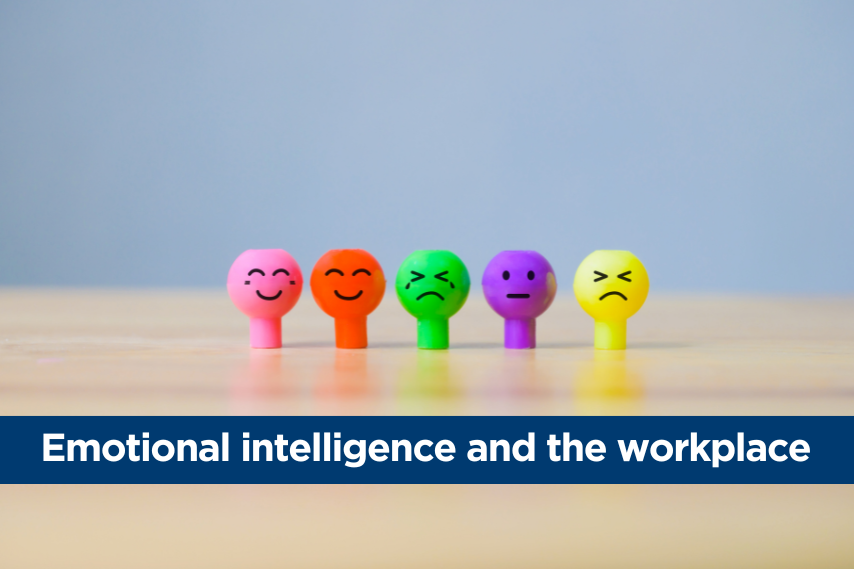
Emotional intelligence (EI) is increasingly recognised as a valuable skill in today’s workplace. Research shows that emotional intelligence is one of the strongest predictors of workplace performance, with 90% of top performers demonstrating high emotional intelligence. There is also growing evidence that people with high emotional intelligence experience better health outcomes. They are more likely to identify and manage emotions linked to stress and conflict, which can strengthen the immune system and reduce susceptibility to serious illnesses.
What is Emotional Intelligence?
Emotional intelligence is the ability to recognise, understand and manage our own emotions, as well as the emotions of others. It differs from cognitive ability, which is measured by an intelligence quotient (IQ). In the past, a high IQ was considered the main predictor of success. Today, experts agree that emotional intelligence is equally important. Psychologist Daniel Goleman suggests IQ accounts for only 20% of success factors, while emotional intelligence, personality, education, and life circumstances make up the remaining 80%.
Why is Emotional Intelligence Important in the Workplace?
Decades of research show that people with high emotional intelligence excel in many areas. They build strong relationships, manage conflict effectively, stay calm under pressure, listen well, and handle feedback constructively. They are often more innovative and report higher job satisfaction, making them highly valued team members.
Leaders with high emotional intelligence also achieve better outcomes. They engage employees, reduce turnover, improve customer satisfaction, and create positive work environments. In fact, the World Economic Forum identified social and emotional intelligence as one of the key skills leaders need to navigate today’s rapidly changing world.
Five Components of Emotional Intelligence
Daniel Goleman’s research identifies five key components:
- Self-awareness – Understanding your strengths, weaknesses, values and goals, and recognising how these influence your behaviour
- Self-regulation – Managing emotions and thinking before acting
- Motivation – Staying positive and resilient, and being driven to achieve and improve
- Empathy – Connecting with others by listening and responding authentically
- Social skills – Building trust and rapport with colleagues
Improving Emotional Intelligence Skills
The good news is emotional intelligence can be developed. Here are some practical steps:
- Assess your skills
- Ask for feedback from trusted colleagues, friends or managers
- Reflect on your emotions and how they influence your behaviour
- Take an online quiz, such as the Global Leadership Foundation’s EI quiz
- Consider training
- Courses are available through organisations such as:
- Centre for Continuing Education, University of Sydney
- CPA Australia
- Australian HR Institute
- Coursera
- LinkedIn Learning
- Courses are available through organisations such as:
Emotional intelligence benefits individuals, teams and organisations. By improving these skills, you can strengthen relationships, enhance performance and create a positive workplace culture.
Career conversations - A guide for parents
You may also like

How to manage your nerves in a job interview
Let’s face it, job interviews can be nerve-racking. […]

Getting Career Ready for 2026
If you’re thinking about putting your job search […]



 Skillset would like to acknowledge and pay respect to the traditional custodians of the lands on which we work.
We are honoured to be on the ancestral lands of those whose cultures are among the oldest living cultures in human history. We pay respect to the Elders, past, present and to the younger generation of the community who will be the future leaders in years to come.